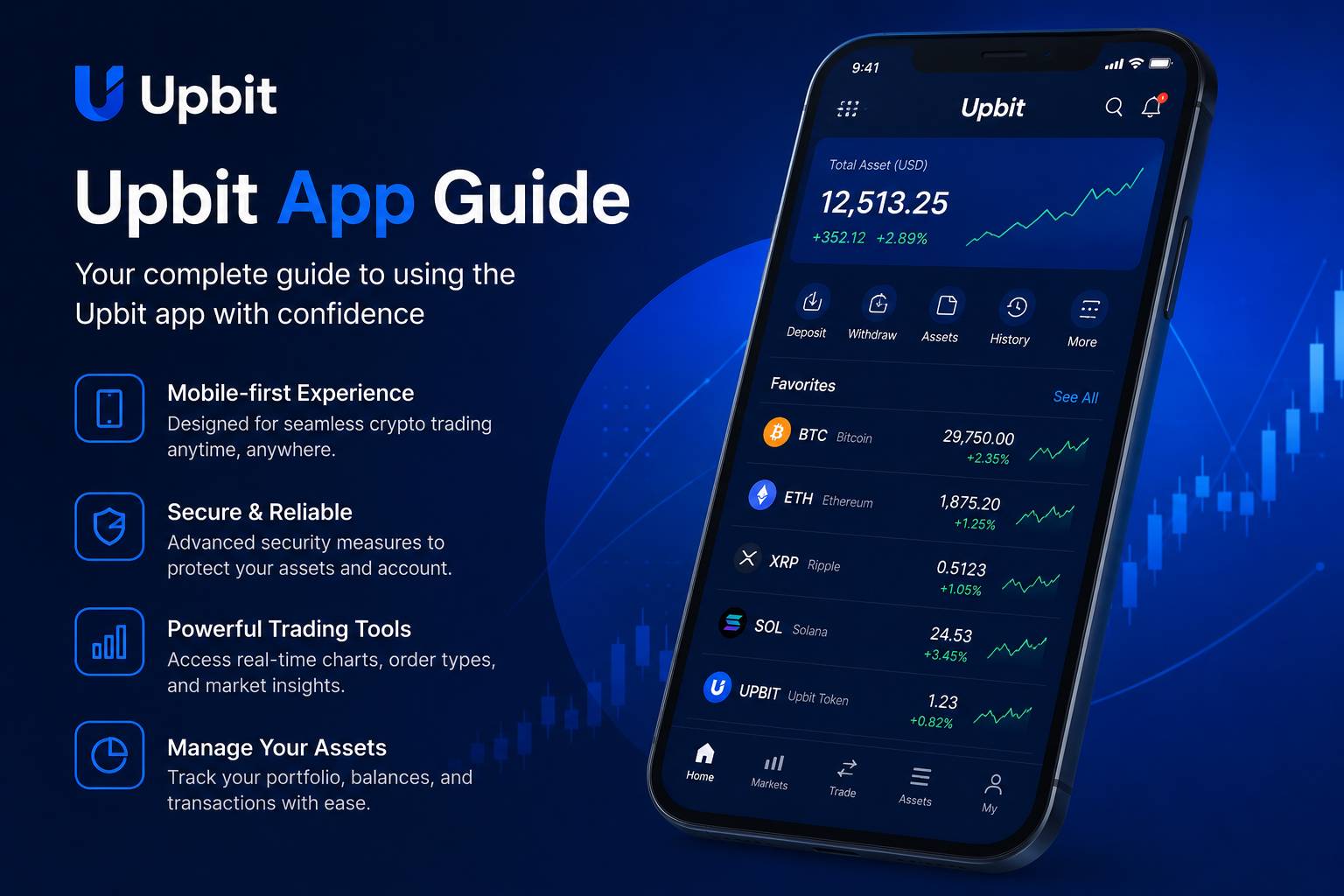
A Complete Introduction to the Upbit App Experience
The Upbit app is often searched by users who want a clear and organized way to understand digital asset access from a mobile device. For many people, a crypto app is not only a place to look at prices. It is also a personal account environment where users check balances, review markets, manage settings, read notices, protect login details and make decisions that may affect their funds. Because of that, the app experience should be approached slowly and carefully. This guide explains the main areas users normally want to understand before they become comfortable with the platform.
A mobile crypto app can feel simple on the surface because most sections are only a tap away. However, behind that convenience are several different layers. There is the account layer, where users manage identity, profile details and verification requirements. There is the security layer, where users protect passwords, authentication tools, device access and account alerts. There is the market layer, where users watch price changes, compare assets and review trading pairs. There is the asset layer, where users view holdings, transaction history and available actions. A good user does not mix these sections together. Instead, they learn what each area is for and move through the app with intention.
This page is written for English-speaking users who want a practical app guide rather than a short promotional description. It does not assume that every reader is an advanced trader. Some readers may be beginners trying to understand where everything is located. Others may already know crypto basics but want a more structured review of the mobile app environment. The goal is to help users understand the experience in plain English, with enough detail to support careful and responsible use.
Why the Mobile App Experience Matters
Mobile access has changed how users interact with crypto platforms. Instead of waiting until they are at a desktop computer, users can open an app from almost anywhere. They can check a market movement during the day, review an account notice, confirm a balance, or inspect a price chart while traveling. This convenience is powerful, but it also requires discipline. When the app is always available, users may feel pressure to act quickly. A responsible mobile experience should encourage clarity, not rushed decisions.
The most important benefit of a mobile-first platform is accessibility. Users can reach important information without needing a complicated setup. A well-designed app should make common tasks easy to find. Users should be able to identify where to view markets, where to check balances, where to adjust security settings, where to read notices and where to review account history. When these sections are clearly separated, the user can build confidence over time. When they are confusing, mistakes become more likely.
Mobile screens are smaller than desktop screens, so layout becomes even more important. A crowded interface can make users overlook details. A strong mobile experience should present information in layers. The most important data should appear first, while deeper tools should be available when the user needs them. Users should not have to guess whether they are looking at a market page, a wallet page, a trading panel or an account setting. Visual order helps reduce confusion.
Another reason the mobile app experience matters is account security. Phones can be lost, shared, infected by unsafe apps or connected to public networks. A user who opens a crypto app on a mobile device must think about device protection as part of account protection. Screen locks, secure email access, app permissions, operating system updates and authentication tools all matter. The app may provide security features, but the user must also maintain safe habits.
Account Areas
Users should understand where account details, profile status, notices, device information and security settings are located inside the app.
Market Pages
Market pages help users observe price movement, asset lists, trading pairs, charts and basic activity without making rushed decisions.
Asset Management
Asset pages help users review balances, transaction records, deposit status, withdrawal status and portfolio information more carefully.
Understanding the Main App Sections
A typical crypto app experience can be divided into several important sections. The first section is the home or dashboard area. This area usually gives users a quick overview of account status, market movement or major shortcuts. It may include access to assets, markets, trading tools and account settings. A user should treat this page as a navigation center rather than a place to make every decision. The dashboard is useful because it provides orientation, but deeper review should happen in the specific sections built for each task.
The second section is the market area. This is where users usually explore asset lists, price changes, trading pairs, volume information and chart movement. Market pages can be exciting because they show real-time or near-real-time movement, but users should not confuse activity with opportunity. A price moving quickly does not automatically mean action is required. Market pages are most useful when users read them calmly and compare information carefully.
The third section is the trading area. This is where extra caution is needed. Trading panels may include order types, price fields, quantity fields, estimated totals and confirmation steps. Before using any trading tool, a user should understand what each field means. Tapping too quickly can lead to mistakes. If a user does not understand the difference between order types or price conditions, they should pause and learn before proceeding.
The fourth section is the asset or wallet area. This is where users review balances, deposits, withdrawals, history and asset-specific information. This area deserves careful attention because asset transfers may involve network rules, address accuracy and transaction status. A user should never assume that all assets behave the same way. Different assets can have different networks, different confirmation times and different risks if details are entered incorrectly.
The fifth section is the account and security area. This is where users review login settings, authentication tools, device management, notifications and other account protections. New users sometimes ignore this section because they want to move directly to markets, but that is a mistake. Security should be reviewed before active use. A user should know how to protect the account before relying on it.
How New Users Can Move Through the App Step by Step
A new user should not try to understand every feature immediately. A better approach is to move through the app in a simple order. First, inspect the dashboard and learn the main navigation labels. Second, open the account settings and review profile information, security options and notification preferences. Third, look at the market section without taking action. Fourth, open asset pages and learn how balances and history are displayed. Fifth, read about fees, trading controls and transfer rules before using advanced actions.
This slow approach helps users build a mental map. When users know where things are located, they feel less pressure. They can return to important sections quickly and recognize when something looks unusual. A mental map is especially helpful on mobile because screens change as users tap through menus. Without a mental map, a user may become dependent on guessing, and guessing is not a good habit for crypto account management.
Beginners should also separate learning from acting. Looking at a chart is learning. Reading an asset page is learning. Reviewing settings is learning. Placing an order, changing account details or moving assets is action. These activities should not be treated the same way. A user can spend a long time learning before taking any action, and that is often the safer path. Crypto apps provide tools, but users remain responsible for how they use those tools.
Another useful beginner habit is to keep a list of terms or sections that are unclear. If the app shows a term such as order book, spread, limit order, network fee, verification level or withdrawal address, the user should understand it before using related functions. A careful user does not need to know everything at once, but they should avoid acting in areas they do not understand.
Account Awareness Inside the App
Account awareness means understanding the condition and security of the account before focusing on market activity. Users should know whether account information is complete, whether verification steps are pending, whether security features are enabled and whether any unusual notices are visible. Account status can affect which features are available, so it is important to review this area early.
The account area may also include device information, login history, notification settings or identity-related requirements. Users should not ignore these details. A new device, unfamiliar login location or unexpected account message may require attention. If something appears unfamiliar, the user should slow down and verify before continuing.
Email security is also part of account awareness. Many crypto accounts depend on email confirmations, password resets or security notices. If the email account is weak, the crypto account may also be exposed. Users should protect their email with strong authentication and avoid using the same password across multiple services.
App review checklist
- Check account profile status.
- Review security settings.
- Confirm trusted device access.
- Inspect market pages slowly.
- Understand asset pages before transfers.
- Read warnings before confirming actions.
Market Viewing and Price Observation
Market viewing is one of the most common app activities. Users open the app to see whether prices are moving, which assets are active and how charts look over different time periods. This can be useful, but it can also create emotional pressure. Fast movement may make users feel that they must act immediately. Responsible users treat market pages as information, not instructions.
A market page can include many details: current price, percentage change, trading volume, chart movement, order book information and recent trades. Each element has a purpose. The current price shows the latest available market level. Percentage change gives context over a period. Volume can indicate activity. Charts help users visualize movement. The order book may show available buy and sell interest. Recent trades may show recent execution activity. None of these elements should be read alone.
Users should also remember that mobile charts are limited by screen size. A chart on a phone may not show as much context as a larger screen. Zooming, switching timeframes and reading labels carefully can help, but users should still avoid overconfidence. A quick glance is not analysis. If a user wants to make a serious decision, they should take more time to review information.
Asset Pages and Portfolio Review
Asset pages are important because they show what the user holds and how account activity is recorded. A user may see balances, estimated values, transaction history, deposit options, withdrawal options and asset-specific details. These pages should be reviewed with care because they connect directly to account value and asset movement.
A good portfolio review is more than checking whether the total value is higher or lower than yesterday. Users should understand which assets are present, whether any balances are small or inactive, whether pending transactions exist and whether recent account activity matches their own actions. If the user sees something unexpected, they should investigate before taking further action.
Deposit and withdrawal areas deserve special caution. Crypto transfers may be difficult or impossible to reverse if the user enters incorrect information. Network selection, address accuracy, memo or tag requirements and minimum amounts must be reviewed carefully. A user should never copy information from an untrusted source or approve a transfer while distracted.
Security Features in a Mobile App Environment
Security features are most effective when users understand why they exist. Authentication tools help reduce unauthorized access. Login alerts help users notice unexpected activity. Device management helps users review where the account has been accessed. Withdrawal protections may add another layer of caution before assets leave the account. These features are not inconveniences. They are part of responsible account management.
Users should review security settings after installing or accessing any crypto app. They should avoid using weak passwords, repeated passwords or passwords saved on shared devices. They should protect authentication apps and avoid sharing codes. They should also be careful with screenshots, cloud backups and messages that contain sensitive information.
Phishing awareness is especially important. Attackers may create fake websites, fake emails, fake support messages or fake app download pages. A safe user does not follow unexpected links without checking. If a message creates urgency, fear or pressure, that is a reason to slow down. The best response to suspicious communication is careful verification.
Building Better Everyday App Habits
A strong app experience depends on the user’s routine. Users should open the app from a trusted location, review important notices, check account status, observe markets calmly and avoid making decisions while distracted. They should log out where appropriate, protect their device and keep recovery information private. These habits may seem simple, but they reduce many common risks.
Users should also avoid treating mobile convenience as a reason to act constantly. Just because an app is available does not mean action is required. Sometimes the best use of a crypto app is observation. Watching markets, reading notices and learning the interface can be valuable without placing orders or moving assets. Patience is an important part of responsible crypto behavior.
Another good habit is periodic review. Users can revisit security settings, notification preferences, asset pages and account history from time to time. This helps them notice changes and stay familiar with the interface. Apps may update, sections may move and features may change. A user who reviews regularly is less likely to be surprised.
The Upbit app experience should be approached as a structured environment, not a single button or shortcut. Users who understand the dashboard, account area, security settings, market pages, trading tools and asset sections will be better prepared to use the app carefully. This guide gives a practical foundation for that process and encourages users to move slowly, read clearly and protect their accounts at every step.
Important Notice
This page is an independent informational guide. It is not operated by or officially affiliated with Upbit. The content is for general education only and does not provide financial, investment, legal or tax advice. Digital assets involve risk, and users are responsible for their own decisions and account security.