Why Fee Awareness Matters for Crypto Users
Fees are an important part of the crypto platform experience, but many users do not think about them until after an action has already been taken. A user may search for Upbit because they want to understand app features, login, trading tools or crypto assets, but fee awareness should be part of the same learning process. Costs can affect trading outcomes, transfer decisions and account planning.
A fee is not only a small line item. It can influence how often users trade, how they move assets, which networks they choose and how they evaluate the result of an action. A user who ignores costs may think a decision performed better than it actually did. A user who understands costs can review account activity more realistically.
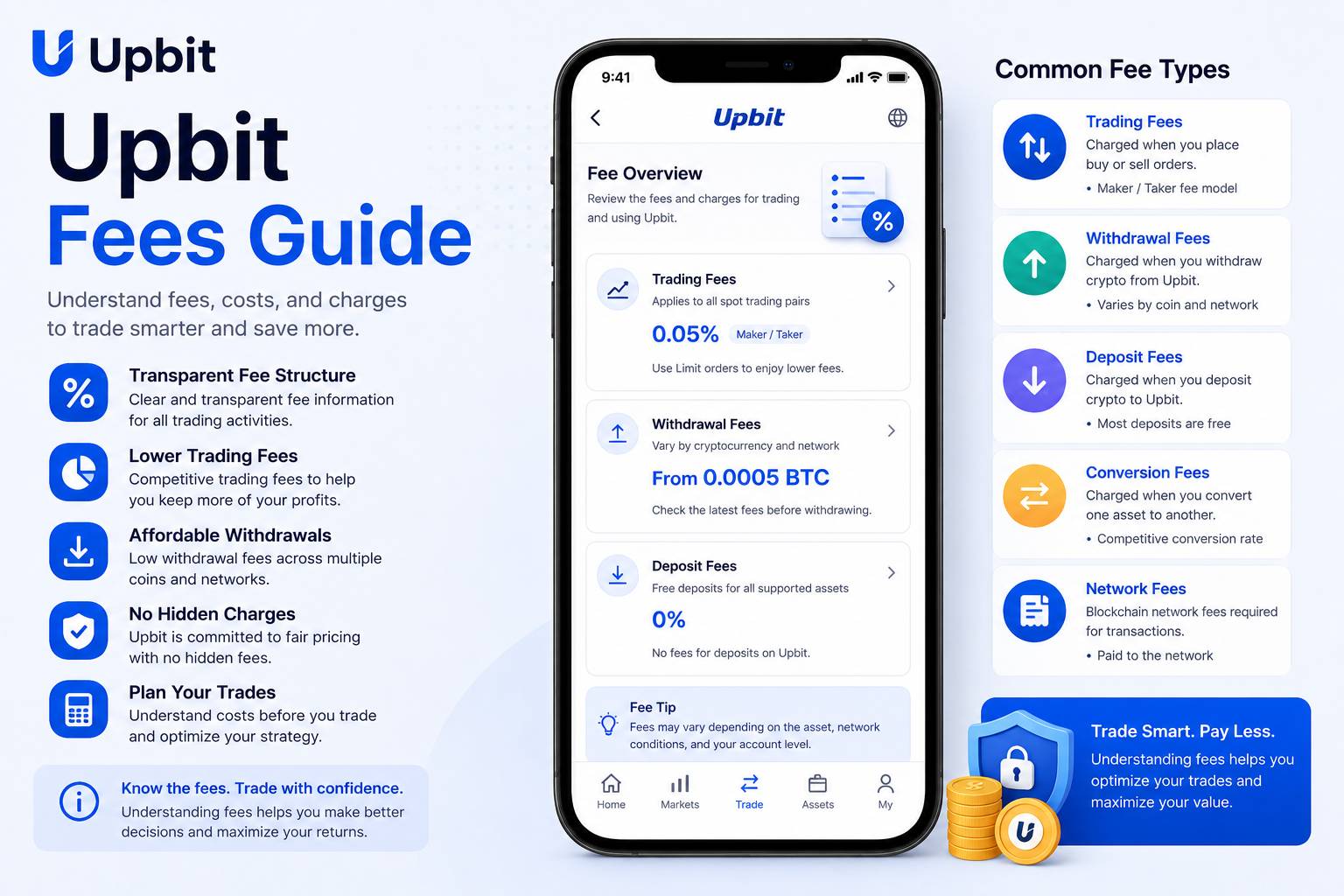
Fees can appear in different forms. There may be trading fees when buying or selling. There may be withdrawal fees when moving assets away from the platform. There may be network costs related to blockchain activity. There may be spread differences or conversion-related costs depending on the structure of a transaction. Users should understand the category of cost before confirming any action.
This guide explains fees from a practical user perspective. It does not provide current fee rates and should not be treated as official fee information. Fee details can change, and users should always check the current platform interface or official fee schedule before trading, depositing, withdrawing or converting assets.
Trading Costs
Trading fees may apply when users buy, sell or exchange digital assets through market tools.
Withdrawal Fees
Moving assets away from an account may involve platform charges, network costs or asset-specific fees.
Cost Review
Users should review estimated totals, fee lines and account impact before confirming important actions.
Understanding Trading Fees
Trading fees are one of the most common cost categories on a crypto platform. They may apply when a user places a buy or sell order. The exact structure can vary depending on platform rules, market type, account status, trading pair or order behavior. Users should not assume that all trades have the same cost. They should check current information before acting.
Trading fees may be calculated as a percentage of transaction value. Even when the percentage appears small, frequent activity can make costs add up. A user who trades many times in one day may pay more in total fees than expected. This is why fee awareness is especially important for active users. Every trade should be reviewed as part of the full account outcome.
Users should also understand the difference between order execution and final result. A trade may execute successfully, but the final account change may include fees. If a user looks only at price movement and ignores fees, the result may be misunderstood. Reviewing order history and fee information helps users see what actually happened.
Fee awareness can reduce unnecessary action. When users understand that every trade may have a cost, they may become more selective and patient. This does not guarantee better decisions, but it encourages more careful behavior. Trading should not be done simply because the app makes it easy.
Maker, Taker and Order Behavior Awareness
Some platforms use fee structures that distinguish between maker and taker activity. A maker order may add liquidity to the order book, while a taker order may remove liquidity by matching with existing orders. The exact definitions and fee treatment depend on platform rules. Users do not need to become experts immediately, but they should know that order behavior can affect costs.
A market order may execute quickly against available orders, which can be convenient but may involve different cost behavior and price movement risk. A limit order may provide more price control, but it may not execute if market conditions do not reach the selected price. Users should understand both fee and execution considerations before choosing an order type.
The lowest visible fee is not the only factor. Execution quality, spread, liquidity and slippage can also affect the final outcome. A user may think they are saving money by focusing only on the fee line, while ignoring the price at which the trade actually executes. Cost awareness should include the whole transaction, not one number.
Before placing an order, users should review the selected market, order type, price, quantity, estimated total and any fee information shown. Confirmation screens should be used as a final review. A careful user does not click confirm until the full transaction makes sense.
Withdrawal Fees and Network Costs
Withdrawal fees are another major cost category. When users move assets away from a platform account, costs may apply. These costs can vary by asset, network, platform rules and blockchain conditions. A user should never assume that one asset’s withdrawal cost tells them what another asset will cost.
Network costs can also change. Blockchain networks may become busier, which can affect transfer fees or confirmation times. Some assets may have multiple network options, and each option may have different costs and requirements. Users must choose carefully because the wrong network can cause serious problems.
Withdrawal review should include the asset, network, address, amount, fee, estimated received amount and any memo or tag requirement. Users should read warnings carefully. A withdrawal is a high-attention action because mistakes can be difficult or impossible to reverse.
Fee review checklist
- Check the current fee information.
- Confirm the selected asset.
- Review the selected network.
- Check the estimated total cost.
- Understand the final received amount.
- Read all warnings before confirming.
Deposit Costs and Asset Availability
Deposits may or may not involve direct platform charges depending on the asset, network and platform rules. However, users should not assume that every deposit is free or simple. Even when the receiving side does not charge a visible fee, the sending side or blockchain network may still involve costs. Users should review both sides of a transfer.
Asset availability is also important. A platform may support an asset for trading but not support every network for deposit or withdrawal. A user should check whether the specific asset and network are supported before sending funds. Sending unsupported assets or using an unsupported network can create serious problems.
Deposit screens may show important instructions such as minimum amounts, network requirements, memo or tag requirements and confirmation expectations. Users should read these instructions carefully. A small mistake during deposit can lead to delays or account credit issues.
Users should also understand that blockchain confirmations take time. A deposit may not appear instantly. Before assuming something is wrong, users should check transaction status, network confirmations and platform notices. However, unfamiliar or unexpected deposits should also be reviewed carefully for account awareness.
Hidden Costs: Spread, Slippage and Timing
Not every cost appears as a direct fee line. Spread and slippage can affect the final result of a trade. The spread is the difference between buying and selling prices in a market. Slippage occurs when the execution price differs from the expected price, often because the market moves or available liquidity changes. These factors can matter, especially in fast-moving markets.
A user may place an order expecting one result but receive a slightly different outcome due to market movement. This is more likely in volatile conditions or markets with lower liquidity. Even when the platform fee is clear, the final execution can still differ from the user’s expectation. That is why users should consider total transaction impact.
Timing also matters. A market may be calm at one moment and volatile shortly after. Fees, spreads and execution conditions can feel very different depending on market activity. Users should avoid placing rushed orders during emotional moments. A decision made under pressure can lead to higher costs and more mistakes.
Understanding these indirect costs helps users become more realistic. The platform may show a fee, but the full cost of an action includes the price, execution quality, spread, timing and account impact. Responsible users review all of these factors before taking action.
How Fees Affect Frequent Trading
Frequent trading can make fees more important. A single fee may seem small, but repeated trades can create meaningful cost over time. Users who enter and exit positions often should pay close attention to fee history and final account results. Without review, a user may not realize how much cost has accumulated.
Frequent trading can also increase the chance of mistakes. More actions mean more confirmation screens, more order fields, more emotional decisions and more cost exposure. A user should ask whether each trade has a clear reason. Trading because the app is open or because a chart moved slightly is not a strong habit.
Reviewing trading history helps users understand total activity. Users can check completed orders, fees, average prices and balance changes. This review can reveal patterns. A user may discover that frequent small trades are less effective than expected after costs are included. Another user may notice that rushed trades produce more mistakes.
Fees should not be the only consideration, but they should always be part of the decision. A user who understands fees is more likely to trade with patience and structure rather than constant reaction.
How Fees Affect Transfers and Portfolio Movement
Transfer fees can affect how users move assets between accounts, wallets or platforms. Moving small amounts frequently may be inefficient if the fee is high relative to the amount. Users should check the fee before initiating a withdrawal and understand the estimated received amount. The amount entered and the amount received may not be the same after fees.
Users should also think carefully before moving assets across networks. A cheaper network may not always be the right choice if the destination does not support it. The correct network matters more than the lowest visible fee. Sending through the wrong network can create far greater loss than paying a higher correct fee.
Some users plan transfers around convenience, but cost and safety should both be considered. A transfer should happen only after the address, network, amount, memo or tag and fee are fully reviewed. Users should not transfer while distracted, rushed or responding to pressure from a message.
Portfolio movement should be intentional. Every transfer changes account structure. Users should know why they are moving an asset, where it is going, what it will cost and what the account will look like afterward. Cost awareness supports better organization.
Building a Better Fee Review Routine
A better fee routine begins before action. Users should check current fee information, read platform notices, review order or withdrawal previews and understand how the action affects the account. Fee details can change, so users should not rely only on old memory or screenshots from the past.
During trading, users should review the selected pair, order type, estimated total and fee information. During withdrawals, they should review the asset, network, address, amount, fee and estimated received amount. During deposits, they should review whether the asset and network are supported and whether any minimum or memo requirement applies.
After action, users should review history. A completed trade or transfer record can show what happened in practice. Users should compare the expected result with the actual record. This habit helps users learn from real account activity and understand how costs affect outcomes.
A good fee routine is not about avoiding every cost. Some costs are part of using crypto platforms and blockchain networks. The goal is to understand costs before they occur. A user who reviews fees carefully is less likely to be surprised, less likely to overtrade and more likely to manage assets with patience.
Important Notice
This page is an independent educational fees guide. It is not operated by or officially affiliated with Upbit. The content does not provide current fee rates and should not be considered financial, investment, legal, tax or account-specific advice. Users should always review current platform fee information before taking action.